
What Does the Future of Cloud & DevOps Look Like?
- Sushma Dharani
- Aug 31, 2025
- 5 min read

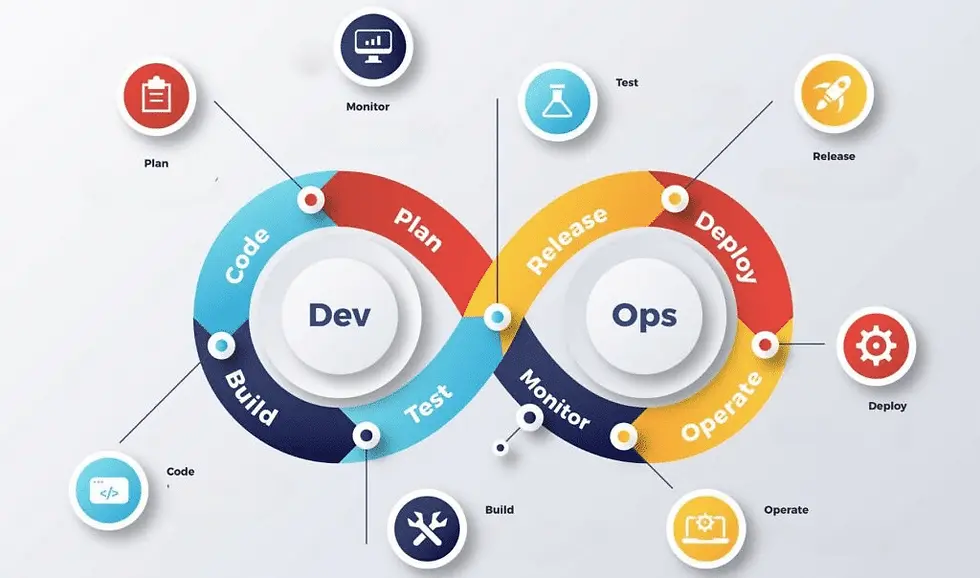
The world of technology is moving faster than ever before. Cloud computing and DevOps, once considered innovative experiments, have now become foundational pillars for modern enterprises. Organizations of every size are leveraging the cloud to achieve agility, scalability, and cost efficiency, while DevOps is bridging the gap between development and operations to accelerate delivery and enhance reliability.
But as businesses look ahead, new trends, challenges, and opportunities are reshaping the future of both Cloud and DevOps. From AI-driven automation to hybrid cloud ecosystems, the upcoming decade will redefine how companies build, deploy, and manage applications. This blog explores what lies ahead for Cloud and DevOps, and how companies like Datacreds can play a pivotal role in helping enterprises adapt and succeed in this rapidly evolving landscape.
The Evolution So Far
To understand the future, it’s important to glance at the past and present.
Cloud computing started as a way to reduce IT infrastructure costs by moving workloads from on-premise data centers to virtualized environments. Over time, it evolved into a powerful enabler of innovation, offering services like Platform as a Service (PaaS), Infrastructure as a Service (IaaS), and Software as a Service (SaaS).
DevOps emerged as a cultural and technical shift to address inefficiencies between development and operations teams. It emphasized collaboration, continuous integration/continuous delivery (CI/CD), automation, and monitoring to streamline the software lifecycle.
Today, cloud adoption is mainstream, and DevOps is no longer a buzzword but a standard practice. Yet, both continue to evolve, driven by advancements in AI, security, sustainability, and business demands for speed and reliability.
Key Trends Defining the Future of Cloud
1. Multi-Cloud and Hybrid Cloud Strategies
Enterprises are no longer tied to a single cloud provider. Instead, they are adopting multi-cloud (using services from multiple cloud vendors) and hybrid cloud (a mix of on-premise and cloud environments) to gain flexibility, avoid vendor lock-in, and optimize costs. In the future, seamless interoperability between platforms will be a core requirement, and tools that simplify workload portability will dominate.
2. Edge Computing
As IoT devices, autonomous systems, and 5G networks proliferate, organizations are moving workloads closer to where data is generated. Edge computing will reduce latency, improve performance, and open new opportunities in industries like healthcare, manufacturing, and transportation. Cloud providers will increasingly integrate edge solutions as part of their offerings.
3. Cloud-Native Architectures
The future belongs to cloud-native technologies—microservices, containers, and serverless computing. These approaches allow businesses to build scalable, resilient, and modular applications that can adapt quickly to changing needs. Kubernetes, in particular, will remain a backbone of orchestration for containerized workloads.
4. AI and Machine Learning in the Cloud
AI/ML will become deeply integrated with cloud services. Instead of merely providing infrastructure, cloud platforms will offer pre-built models, AI-driven insights, and automated decision-making systems. This will accelerate innovation in sectors like finance, healthcare, and e-commerce.
5. Sustainable Cloud Practices
With increasing focus on environmental responsibility, cloud providers are investing heavily in renewable energy and carbon-neutral operations. Future cloud strategies will prioritize green computing, with organizations demanding transparency on carbon footprints and energy efficiency.
The Future of DevOps
While cloud adoption continues to rise, DevOps is evolving in parallel to meet the demands of modern businesses.
1. AI-Driven DevOps (AIOps)
Automation has always been a core part of DevOps, but the next step is AIOps, where artificial intelligence powers smarter monitoring, faster root cause analysis, and predictive maintenance. AI will help DevOps teams identify potential failures before they occur and recommend fixes in real time.
2. GitOps and Infrastructure as Code (IaC)
The principle of managing infrastructure the same way as code will dominate the future. GitOps, where Git becomes the single source of truth for deployments, will streamline CI/CD pipelines and bring version control discipline to infrastructure management. This will enable faster, more secure, and consistent deployments.
3. Security-First DevOps (DevSecOps)
With cyber threats on the rise, organizations can no longer treat security as an afterthought. DevSecOps integrates security practices into every stage of the development lifecycle. Automated compliance checks, vulnerability scanning, and policy enforcement will become standard in all DevOps pipelines.
4. Continuous Everything
The future of DevOps is about continuous everything—continuous testing, delivery, monitoring, and feedback. This ensures a faster cycle of innovation while reducing risks and improving product quality. The emphasis will be on shortening time-to-market without compromising reliability.
5. Cultural Shifts
Beyond tools and automation, DevOps is fundamentally a cultural movement. Future DevOps practices will put greater emphasis on collaboration, cross-functional teams, and a mindset of shared ownership and accountability across the organization.
The Convergence of Cloud and DevOps
The lines between Cloud and DevOps are blurring. Cloud platforms provide the infrastructure and services necessary for DevOps practices, while DevOps methodologies ensure that businesses fully leverage the potential of the cloud. Their convergence will be defined by:
Cloud-native DevOps: Building and managing applications designed specifically for cloud environments.
End-to-end automation: From infrastructure provisioning to application monitoring, everything will be automated and orchestrated through the cloud.
Scalability and resilience: Cloud’s scalability combined with DevOps practices will ensure applications are always available and adaptive.
Security integration: With both cloud and DevOps evolving, security will become tightly integrated across platforms and pipelines.
Challenges Ahead
Despite the opportunities, enterprises will face several challenges in the future of Cloud and DevOps:
Skill gaps: There will be a growing demand for professionals skilled in cloud-native technologies, DevSecOps, and AI-driven tools.
Complexity: Managing multi-cloud and hybrid environments can introduce operational and architectural complexity.
Cost optimization: Without proper governance, cloud costs can spiral out of control.
Compliance and regulations: Different regions will impose unique compliance requirements, making governance a challenge.
Cultural adoption: Organizations resistant to cultural change may struggle to fully embrace DevOps principles.
How Datacreds Can Help
As enterprises navigate this future, Datacreds emerges as a trusted partner to bridge the gap between innovation and execution. Here’s how Datacreds can support businesses in their cloud and DevOps journey:
1. Cloud Strategy and Implementation
Datacreds helps organizations design and execute customized cloud strategies, whether it’s public, private, hybrid, or multi-cloud. From migration to optimization, businesses can rely on Datacreds to align cloud adoption with their goals.
2. DevOps Enablement
By implementing CI/CD pipelines, Infrastructure as Code, and automated workflows, Datacreds enables faster software delivery with higher reliability. Their DevOps expertise empowers organizations to embrace continuous innovation while minimizing risks.
3. Security and Compliance
With a strong focus on DevSecOps, Datacreds ensures that security is embedded into every stage of development and deployment. They help organizations meet regulatory requirements while maintaining robust cybersecurity practices.
4. AI-Driven Solutions
Datacreds leverages AI and machine learning to optimize cloud performance, predict potential issues, and automate resolution. This not only reduces downtime but also improves overall efficiency.
5. Cost Optimization
Through advanced monitoring, governance frameworks, and automation, Datacreds helps businesses control and optimize cloud costs, ensuring maximum ROI from their cloud investments.
6. Skill Development and Training
Datacreds provides training and upskilling programs, helping enterprises address the skills gap in cloud-native technologies, DevOps, and AI-powered operations.
Final Thoughts
The future of Cloud and DevOps is dynamic, interconnected, and full of possibilities. Organizations that embrace cloud-native architectures, AI-driven automation, and DevSecOps will gain a competitive edge. However, success in this journey requires not just tools and technologies but also the right strategies, skills, and cultural transformation.
As enterprises prepare for this future, partners like Datacreds will play a critical role in guiding them through complexities, unlocking new efficiencies, and ensuring sustainable growth. The next decade of Cloud and DevOps isn’t just about technology—it’s about reimagining how businesses operate, innovate, and deliver value in an increasingly digital world. Book a meeting if you are interested to discuss more.


Comments